
 Many say that writing checks is a thing of the past. However, research actually shows that nearly 46% of people write at least 1-2 checks a month.
Send a Check Using Regular Mail
Standard mail services in the US are typically quite safe - in fact, people send checks via snail mail every day. In today's world, this might not seem like the most effective form of delivery, but before everything went digital, this was common practice. For years, individuals, businesses, and government agencies have all made use of regular postal services to send checks.
It can still feel a bit daunting putting an important check in the mail, especially if it's for a lot of money. It is, however, still considered by many to be the safest way to mail a check, so it's very unlikely you'll have any issues.
Tips on How to Mail a Check Safely
While mailing checks is a common practice, taking these steps will help to ensure your check reaches its intended destination.
Deliver to a Safe Place
Instead of leaving the letter, with the enclosed check, in your flagged mailbox for outgoing mail, it is best to drop off the letter in an official postal collection box, hand it directly to a uniformed mail carrier, or take it to the Post Office.
Choose the Right Envelope
When mailing a check, you’ll want to make sure prying eyes can’t tell there’s something valuable inside. The best option is to use security envelopes—these are the ones with opaque or patterned linings that prevent anyone from seeing what’s inside, even if they hold the envelope up to the light. You can find these envelopes at office supply stores like Staples, big box retailers such as Walmart, or easily order them online from sites like Amazon.
If security envelopes aren’t available, there’s a quick trick: simply wrap your check in a blank sheet of paper before inserting it into a regular envelope. This extra layer helps conceal the contents and offers added protection, making it less obvious there’s a check inside.
Using these methods, you’ll help safeguard your check and reduce the risk of theft or tampering.
Use a Security Pen When Writing Checks
It’s a good idea to use a security pen when preparing a check for mailing. Unlike regular pens, security pens use ink that’s resistant to tampering—meaning the writing can't be easily washed or altered. This added layer of protection makes it much harder for someone to modify the check or change key details if it were to fall into the wrong hands.
Security pens, which you’ll find at most office supply stores, are inexpensive and easy to use. Taking this simple step ensures your payment stays secure while in transit.
Seal Your Envelope Securely
After addressing your envelope and enclosing your check, be sure to seal it tightly. The traditional lick-and-stick method sometimes isn't enough, especially for envelopes carrying something as important as a check. Instead, consider reinforcing the flap with clear tape—just avoid covering the postage stamp or barcode area, as this can interfere with mail processing.
For added peace of mind, you can also use security seals or specialty envelopes designed specifically for checks. These options make it harder for anyone to tamper with the contents or detect what's inside. Taking these steps helps protect your check until it reaches its destination.
Consider Using Security Pens
If you're concerned about check fraud—especially when mailing larger amounts—security pens offer an extra layer of protection. Unlike regular pens, which can use ink that clever thieves might wash away and alter, security pens contain specially formulated, non-erasable ink. This ink seeps deep into the check paper, making it much more difficult, if not impossible, for anyone to erase or modify the original details.
You can find security pens from popular brands like Uni-ball and Sharpie at most office supply stores. Writing your check with one helps safeguard against the risk of someone tampering with your payment after it leaves your hands.
Track the Package
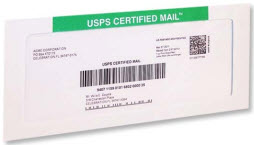
Certified Mail® is the best way to send a check. The tracking capabilities associated with Certified Mail are helpful when monitoring where a check is after you've mailed it. The sender also receives delivery confirmation when the check is signed for by the recipient.
Certified Mail does cost more than a first-class postage stamp, but the peace of mind it provides is worth the added spend. You'll be able to track it in the mail stream and will know when it arrives. You can even give the tracking details to the recipient so they can monitor it too.
Interested in saving $3.45 on each Certified Mail letter you send? Certified Mail Labels allows you to address and print USPS Certified Mail Labels online from the comfort of your home or office. Senders receive proof of mailing, letter tracking, and delivery confirmation all while skipping the trip to the Post Office completely.
Let the Recipient Know
It’s a smart idea to let the recipient know when you’ve mailed a check and provide them with any tracking details. Giving them a heads-up ensures they know to expect the envelope and can keep an eye out for it in their mailbox. This way, if the check seems to be delayed or goes missing, you’re both alert right away and can take quick action if needed.
By keeping your recipient in the loop, you help prevent accidental loss or theft—especially if the check might sit unattended in an apartment mailroom or office mailbox. Notifying them also makes it easier for the recipient to report any issues to their local post office and confirm safe delivery.
Fill Out the Check Carefully
Before you even seal the envelope, start by ensuring your check is filled out completely and correctly. Double-check that all the information—such as the payee, date, and amount—is accurate and that you haven’t left any sections blank. If there’s extra space between the written amount and the word “dollars” on the line, draw a horizontal line through the space. This simple step helps prevent anyone from altering the amount.
Restrict the Check
On the back of a check, there is an endorsement area. Here you can write "For deposit only to account of payee” which will make things safer. It ensures that no one will be able to cash it without leaving a record.
If someone other than the intended recipient intersects the check, they might try to cash it or sign it over to someone else. When doing this, it will leave a record of the bank account. This solution, while not completely foolproof, is often very helpful.
It is not wise to send checks payable to cash through the mail. This is essentially the same as sending cash, which is quite risky.
Hide the Check
When mailing a check, it is a good rule of thumb to disguise it as a letter. Especially, if the envelope can be easily seen through when held up to the light. Wrapping the check in a folded sheet of paper can make it harder to decipher the contents of the envelope. Checks frequently get mailed, so many may consider this unnecessary, but it is an additional step to provided senders with peace of mind.
Double-Check the Address
This may seem like an obvious tip, but you should always double-check the address before sending a check. It's an easy mistake to make, and it only takes a few seconds, so it's well worth doing this every time you need to mail a check.
Mailing a Check Internationally
Mailing a check overseas requires a few extra steps to boost your peace of mind. For starters, always hide the check within another sheet of paper or use an opaque envelope, just like you would with domestic mail, to keep prying eyes at bay. When filling out the check, it's wise to use a permanent or gel pen—these are more resistant to tampering or washing.
Opt for a mailing service that provides international tracking, such as USPS Priority Mail International, FedEx, or UPS. Being able to keep tabs on your check as it makes its journey not only offers reassurance, but also allows the recipient to anticipate its arrival.
Before mailing, it’s also a good idea to reach out to your recipient. Sometimes, there might be a faster or more secure method available, like a wire transfer or another electronic payment option. Whichever method you choose, double-check the recipient's international address, as errors are even harder to fix after a long-distance mail has shipped.
What if Something Happens?
You can take all of the precautions above to keep a check as safe as possible, but there's always a slight risk that something can still happen. If someone steals it, they'll need to forge your signature or alter the check to steal your money, but this is very difficult to achieve with modern checks and banking technology.
The thief will also need to get a bank to accept the check using a fake endorsement, which is highly difficult without showing proper identification. If they do this, there's a good chance you'll be able to get the thief's identity.
In the chance they manage to pull it off and get your money, you should immediately contact your bank and law enforcement officials. You may be protected from loss by state laws, but you need to make sure you follow the applicable steps for your state. If you suffer any losses, the bank that cashed the check may be liable.
If you do notice any suspicious or fraudulent activity in your bank account, reach out to your bank’s customer service department as soon as possible. They can help investigate what happened, attempt to reverse unauthorized charges, or—if needed—close your current account and reopen a new one with a different account number. Acting quickly not only increases your chances of recovering your funds but also helps prevent further unauthorized transactions.
If the check never arrives at the destination, you can request a stop payment from your bank. This will flag the check so that it cannot be cashed. Just note that there is sometimes a fee associated with doing this.
If the check was mailed via Certified Mail and does not reach its destination, you are eligible for a refund from USPS. To request a refund for services not rendered from the U.S. Postal Service, you will need to get the Revided PS Form 3533, here’s how.
Alternatives to Mailing a Check
Modern banks allow you to send money in different ways, so it's possible to use another method if you prefer.
Wire transfers are a common choice, or you could use another service such as PayPal, Venmo, or CashApp. Remember, these apps do not offer the same protection as FDIC insured banks though.
Best Way to Mail a Check
It's becoming less common, but many people still mail checks the old-fashioned way, and there's no reason you can't, too. Just bear in mind that you should take the precautions above to keep your check as safe and secure as possible.
When you mail a check, Certified Mail Labels is the easiest and cheapest way to do so. Create and print your Certified Mail labels online now!
Once your check is delivered, we'll send you an Electronic Delivery Confirmation Report™ directly to your inbox so you can be confident your piece was securely delivered.

Related Articles
 What's the US Postal Service rates for Certified Mail? |
 How To Write A Check: A Quick And Easy Guide |
 How to create a USPS shipping label with Excel? |